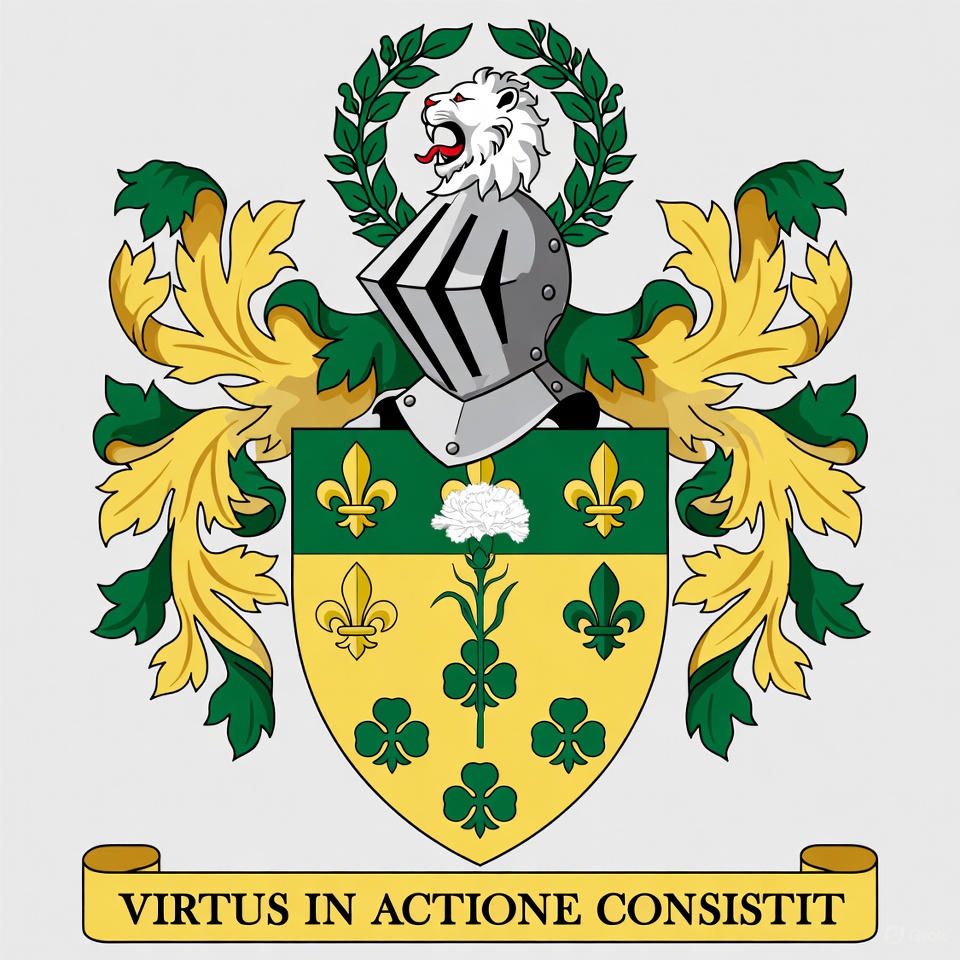
Unveiling the Legacy of the Ashcombe Family
True virtue is proven by deeds, excellence lies in action.
The Ashcombe line reaches back almost a thousand years. Their earliest recorded forebear, Renaud d’Ascombe, rode under William the Conqueror at Hastings and earned his first northern estates for what the chronicles politely called “decisive actions” against local resistance. From those grim beginnings, the family embedded itself deep into the political bloodstream of the nation. By the time of the War of the Roses, the Ashcombes backed the House of York — not out of romance, but because the Yorkist claim secured their trading routes and mineral rights in the north. Their gamble paid off until it didn’t; one ancestor, Sir Lionel Ashcombe, was dragged from his horse at Bosworth and narrowly escaped execution by offering Henry Tudor the loyalty of Keswick’s men. It proved a shrewd pivot.
During the Henrician upheavals, the family thrived again. Records place Lord Edmund Ashcombe at court during the break with Rome, advising on land seizures that made the crown and the family considerably richer. One rumour — never formally confirmed — suggests an Ashcombe hand helped identify which monasteries were “most dispensable” when the King needed coin.
The Civil War split many noble houses. The Ashcombes picked Parliament, not out of moral fervour but because Cromwell guaranteed their iron and mining contracts. Colonel Nathaniel Ashcombe led a regiment at Marston Moor before later smoothing his way back into royal favour during the Restoration with a well-timed loan to Charles II.
Across centuries of conflict, power shifts and uneasy alliances, the pattern never changed. The Ashcombes backed the winning side, or switched sides a moment before everyone else realised which was the winning one. Their influence moved with the times — from court to Parliament, from battlefield to boardroom — but never waned. Even now, the family can trace an unbroken line from the Norman settlement to the present day. Titles altered, lands expanded or shrank, but one thing endured. When power in Britain was being exercised, an Ashcombe was almost always somewhere in the room.